13 Sept 2022
SABIC to debut at InnoTrans a new EN45545 rail-compliant additive manufacturing solution to help advance the transportation industry
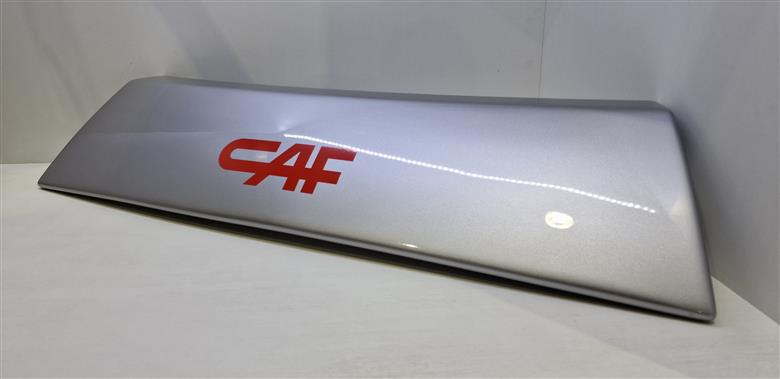 SABIC, a global leader in the chemical industry, will introduce at InnoTrans 2022 in Berlin, Germany, LNP™ THERMOCOMP™ AM DC0041XA51 compound, a novel carbon fiber-reinforced, flame-retardant (FR) compound well-suited for pellet-fed additive manufacturing (PFAM) that complies with E.U. and U.S. rail fire safety standards. The innovative new compound can help the rail industry advance from building traditional tools for part production from thermosets to utilizing on demand 3D printing which can potentially lower system costs by reducing inventory levels of large tools and replacement parts.
6 Sept 2022
SABIC launches new LNP™ THERMOCOMP™ compounds for automotive GNSS antennas, offering improved signal gain vs. ceramics
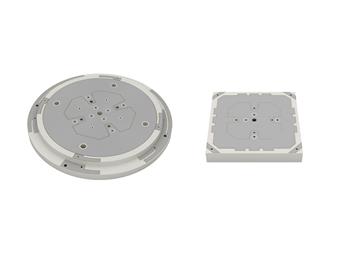 SABIC, a global leader in the chemical industry, today introduced two new LNP™ THERMOCOMP™ compounds that offer the potential to improve signal gain performance vs. ceramics in second-generation automotive global navigation satellite system (GNSS) antennas. The new products, LNP THERMOCOMP ZKC0CXXD compound and LNP THERMOCOMP ZKC0DXXD compound, help enable the design and molding of antenna substrates with more-complex pattern markings that add effective surface area, a critical factor in enhancing signal capture. For customers that currently use ceramics, switching to the LNP THERMOCOMP compounds can help lower system costs by avoiding secondary operations, as well as improving antenna performance. Designers and engineers who find incumbent materials inadequate for developing novel, high-resolution GNSS antennas can help address new requirements with the SABIC products.
31 Aug 2022
SABIC launches new short-glass fiber-filled PP compounds with enhanced performance for automotive structural applications
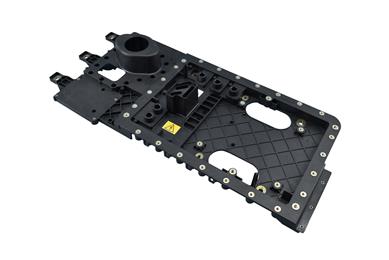 SABIC, a global leader in the chemical industry, today introduced SABIC® PP compound G3430X and SABIC PP compound G3440X grades, two new short-glass fiber-reinforced polypropylene (PP) compounds offering enhanced performance and processing for demanding automotive under-hood, exterior and interior applications. The two advanced grades surpass high-performing standard short-glass fiber materials in melt flow, tensile and flexural strength, and flexural modulus. SABIC PP compound G3430X and G3440X grades give customers new opportunities to raise the performance bar for automotive structural components such as brackets, seat structures and center consoles. Furthermore, thanks to their thin-wall capability, both materials can be used to design parts with lower mass and weight.
25 Aug 2022
SABIC expands chemically resistant LNP™ CRX portfolio with four new sustainable, thin-wall flame retardant copolymers for healthcare and consumer electronics
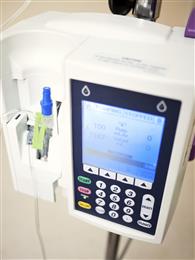 SABIC, a global leader in the chemical industry, has expanded its portfolio of exceptionally chemically resistant LNP™ CRX polycarbonate (PC) copolymer resins with four new grades, featuring sustainability, thin-wall flame retardancy (FR), low-temperature ductility and ultraviolet (UV) stability, well-suited for healthcare and consumer electronics applications. There are two product pairs, each with a bio-based version that can further reduce environmental impacts and help lower carbon footprint. These high-performance materials can help meet customer demands for world-class resistance to chemicals ranging from the harsh disinfectants widely used in healthcare applications to sunscreen and hand creams that often come in contact with consumer electronics devices. The new LNP CRX grades also offer the potential to enhance regulatory compliance and design flexibility.
23 Aug 2022
SABIC expands its ULTEM™ resin optical material portfolio to help advance the adoption of single-mode fiber optics
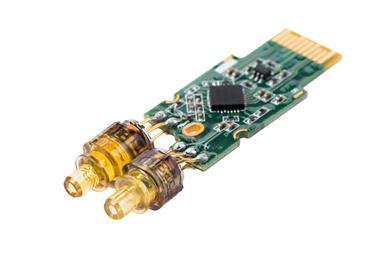 SABIC, a global leader in the chemical industry, has expanded its optical materials portfolio with the launch of ULTEM™ 3310TD resin, which is well suited for optical transceiver collimator lenses used in single-mode fiber optic systems. This new polyetherimide (PEI) resin delivers a significantly lower coefficient of thermal expansion (CTE) than that of standard ULTEM grades. A low CTE is essential to optimize the dimensional stability of the collimator lenses and ensure alignment with single-mode fibers. Furthermore, the new grade provides near-infrared (IR) transmission without degrading signal quality. As a potential replacement for glass, ULTEM 3310TD resin offers the efficiency of high-volume micro-molding, avoids the need for costly secondary operations, expands design freedom and lowers part weight.
23 Aug 2022
SABIC, through its joint venture company, SABIC SK NEXLENE Company (SSNC), expands capacity of Korea NEXLENE™ plant for advanced polyolefin material solutions
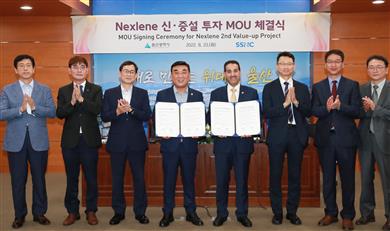 SABIC, a global leader in the chemicals industry, has announced that its SABIC SK Nexlene Company (SSNC) joint venture with SK Geo Centric (formerly SK Global Chemicals) in South Korea will expand the capacity of their plant in Ulsan for production of advanced material solutions using NEXLENE technology. The plant, operated by Korea Nexlene Company (KNC), supports the production of SABIC’s broad portfolio of COHERE™ metallocene polyolefin plastomers (POP), SUPEER™ metallocene linear low density polyethylenes (mLLDPE) and FORTIFY™ polyolefin elastomers (POE).
26 Jul 2022
SABIC’S new SMT-capable ULTEM™ 3473 resin helps reduce weight of RF filters in 5G macro cells by up to 40%
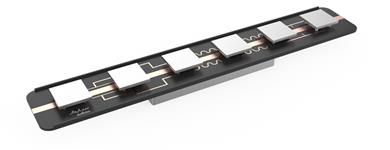 SABIC, a global leader in the chemical industry, today introduced ULTEM™ 3473 resin, its first polyetherimide (PEI)-based material with surface mount technology (SMT) capability. This new product addresses the growing trend toward smaller, lighter 5G macro cells by providing a possible replacement for metal. For example, ULTEM 3473 resin can help reduce the weight of an aluminum radio frequency (RF) cavity filter by up to 40 percent. In a typical macro cell with 64 filters, this weight saving can be significant. Furthermore, this new resin can help facilitate the design of new, integrated antenna filter units (AFUs), which is not achievable with metal. Using injection molding, the dipole antenna matrix and RF cavity filter body can be produced as one piece. This approach simplifies production and may lead to additional weight savings and system cost reductions.
19 Jul 2022
SABIC launches blockchain pilot for digital traceability of certified circular TRUCIRCLE™ feedstock
 SABIC, a global leader in the chemicals industry, has launched a pilot project with technology company Finboot, advanced recycling pioneer Plastic Energy, and packaging specialist Intraplás to investigate the possibilities of blockchain technology in supporting end-to-end digital traceability of circular feedstock in customer products.
7 Jul 2022
SABIC debuts new PP compounds for foam injection molding, providing both light weight and exceptional aesthetics for automotive interiors
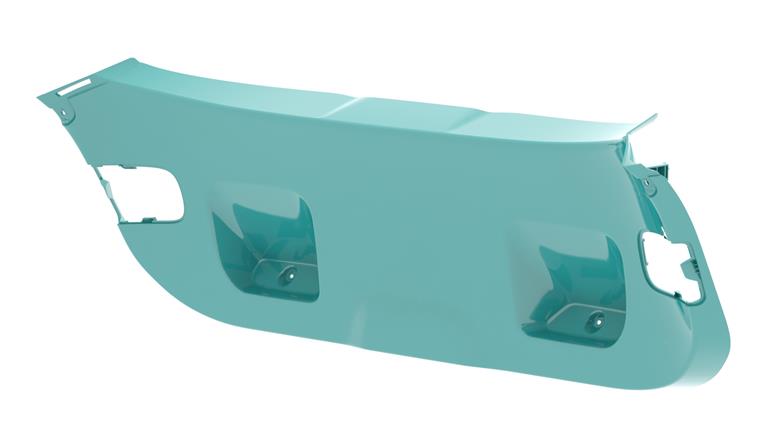 SABIC, a global leader in the chemical industry, today introduced a specialized portfolio of SABIC® PP compounds for foam injection molding (FIM). New mineral-reinforced SABIC® PPc F9005, PPc F9007 and PPc F9015 grades can help deliver excellent aesthetics for visible automotive interior parts with complex geometries, such as door panels and trim, seat and trunk cladding, A/B/C/D pillar covers and center consoles. Unlike standard FIM materials, which typically exhibit surface defects, the new advanced PP compounds feature uniformly high surface quality similar to solid injection molded parts. Compared to solid components, foamed parts made with SABIC PP compounds offer significant weight savings that can help cut emissions. According to a cradle-to-grave life cycle assessment study (pending third-party review), the advanced new materials can help OEMs lower carbon dioxide (CO2) emissions by as much as 15 percent.
28 Jun 2022
SABIC to highlight BLUEHERO™ electrification initiative and advanced material solutions for batteries and energy storage at The Battery Show Europe 2022
 SABIC, a global leader in the chemical industry, will showcase, for the first time, its strategic BLUEHERO™ electrification initiative at The Battery Show Europe 2022 (Booth 8-F10) from June 28 to 30 in Stuttgart, Germany, while also highlighting its comprehensive materials offering and expertise for next-generation batteries and energy storage applications. The recently announced BLUEHERO initiative underscores SABIC’s commitment to help support the shift to electric power, with the delivery of automotive polymer materials, solutions and capabilities for the enhancement of EV battery systems as its first area of focus.
21 Jun 2022
SABIC’s new NORYL™ resin offers exceptional CTI and FR properties for ultra-thin-wall insulation film in high-voltage EV batteries
 SABIC, a global leader in the chemical industry, today introduced NORYL™ NHP8000VT3 resin, a product well suited for insulation film used in electric vehicle (EV) battery modules to help improve protection against short circuits and fire propagation. This high-performance, polyphenylene ether (PPO)-based resin is engineered with patented technologies to help meet the stringent demands of higher-voltage batteries (600-800 volts). It achieves the highest comparative tracking index performance level category (CTI PLC0), provides ultra-thin-wall extrusion and thermoforming capability, and meets the UL94 V0 standard at 0.25 mm with non-brominated, non-chlorinated flame retardance. NORYL NHP8000VT3 resin provides a novel solution to the drawbacks of incumbent insulation films made with polycarbonate (PC) and polypropylene (PP) by delivering stronger CTI performance and thinner-wall FR capability. This exceptional material can help advance EV battery technology by contributing to occupant safety, weight reduction and higher efficiency for extended range.
21 Jun 2022
SABIC launches BLUEHERO™ to help accelerate world’s shift to electrification and lower carbon future, with initial focus on automotive industry
 SABIC, a global leader in the chemical industry, today introduced BLUEHERO™, an expanding ecosystem of materials, solutions, expertise and programs aimed to help accelerate the world’s energy transition to electric power and support meeting global goals on climate change. The company’s starting point with BLUEHERO is support of the automotive industry’s mission to create better, safer and more efficient electric vehicles (EVs), with an emphasis on improving structural battery components with unique flame retardant materials and solution development expertise.