11 Apr 2005
Great Lakes Picks GE’s GELOY* Resin for Enhanced Color, Aesthetics & Long-Term Weatherability on New Line of Hot Tubs
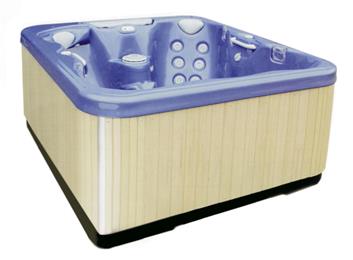 BERGEN OP ZOOM, THE NETHERLANDS — Great Lakes Home & Resort, manufacturer of Great Lakes Hot Tubs™, today announced a new line of hot tub shells in vibrant, highly weatherable colors for which it has selected GE Advanced Materials’ GELOY* XTW E290 resin, a new extrusion grade of acrylic-styrene-acrylonitrile (ASA) resin for large-part thermoforming. GE developed the material for Great Lakes to help enable the hot tubs to withstand the rigors of prolonged outdoor abuse while retaining their outstanding aesthetic appeal and functionality.
11 Apr 2005
Dow Corning showcases new, advanced products at Electronica & Productronica 2005 show
 Mar 15, 2005 Shanghai Dow Corning¡¯s, electronics and advanced technologies businesses used the Electronica & Productronica 2005 show, Mar 15-17 Shanghai, to demonstrate their latest product and technology advancements. The show attracted a high degree of interest and visitors to Dow Corning¡¯s booth reinforcing the company¡¯s leading position as a materials, technology and service supplier to the electronics industry.
7 Apr 2005
GE Positions New LNP* VERTON* Compounds as Alternatives to Short-Glass Products and Metals in Demanding Applications
 BERGEN OP ZOOM, THE NETHERLANDS — GE Advanced Materials, Plastics today introduced two new grades of its glass-reinforced LNP* VERTON* polybutylene-terephthalate (PBT) compound as alternatives to competitive short-fiber glass-filled PBT, polypropylene (PP) and nylon resins. LNP VERTON WF-7007 compound, with a 35% long glass-fiber loading, and LNP VERTON WF-700-10 compound, with a 50% loading, deliver enhanced toughness, strength, and stiffness at wide temperature extremes. These properties, combined with light weight and exceptional UV and corrosion resistance, make the two new compounds excellent candidates for metal replacement in an array of outdoor applications, as well as for a variety of automotive, electrical, and consumer components where exceptional toughness and durability are required.
6 Apr 2005
GE Moving to Improve Pedestrian Safety: Company’s XENOY* Resin Helping to Re-Define Pedestrian Impact Protection Systems
 BERGEN OP ZOOM, THE NETHERLANDS – GE Advanced Materials, Automotive has developed new Pedestrian Impact Protection materials and design innovations to help automotive manufacturers and tier suppliers with the design of front-end safety systems. In GE’s new, front-end safety concept, energy absorbers molded from the company’s XENOY* resin are positioned directly behind the vehicle’s fascia to help cushion possible impact. GE has developed the concept to help meet European Union (EU) pedestrian protection legislation due to come into effect in 2005.
 JEC Composites
5 Apr 2005
From Wing to Wing & Nose to Tail, GE Materials Technologies Bring High-Performance to Broad Range of Critical Aircraft Applications
 BERGEN OP ZOOM, THE NETHERLANDS — GE Advanced Materials is showcasing its latest product innovations for the aircraft interiors industry here at the Aircraft Interiors Expo, April 4 - 7, 2005. With the theme “Imagination at Work,” the company is featuring – in hall 6, stand C32 – high-performance engineering resin and sheet materials that have been designed to help enable development of next-generation aircraft interior components. Beyond interiors, GE also offers an impressive portfolio of plastics, silicones, quartz, and ceramic products that deliver critical properties in aircraft applications ranging from windshields, structural components, door and engine gaskets, seals for passenger window assemblies, and brake systems to weather stripping, fuel cell coatings, and lighting and wiring components.
5 Apr 2005
Dureal™ opens first commercial adblue filling station in Spain at La Jonquera
 Barcelona, 5 April, 2005 – The first commercial adblue filling station in Spain was officially opened today at La Jonquera. This is one of Europe’s biggest truck stops, located on the AP7 / N II, the main route connecting Spain and France. The filling unit for adblue, used as a reagent by SCR equipped heavy duty diesel vehicles to comply with the Euro IV emission standards, was supplied by Dureal™ and will be operated by Tortuga.
5 Apr 2005
Owens Corning Introduces New SE 8400 Low Seed Single-End Continuous Roving for High-Voltage Applications
 PARIS, France: April 5, 2005 – At the JEC Composites Show, Owens Corning today introduced SE 8400 LS, a new single-end Type 30® roving to meet the demanding electrical requirements for such pultruded FRP applications as medium- and high-voltage transmission and distribution (T&D) long-rod insulators. SE 8400 LS combines the anti-corrosion, electrical, and mechanical benefits of boron free Advantex® E-glass manufactured using state-of-the-art glass melting technology and advanced low-seed filament technologies, ensuring seed levels well below .5 seeds/gram. Minimizing microscopic bubble voids or “seeds” in the glass avoids the formation of hollow filaments, which increase conductance, offering the path of least resistance to the electrical energy, and causing system failure.