08-09-2021
SABIC, St. Johns Packaging and Kingsmill launch world’s first ever bread packaging based on recycled post-consumer plastic
 SABIC, a global leader in the chemical industry, has announced the successful roll-out of another project as part of its TRUCIRCLE™ program to accelerate the implementation of a circular plastic economy. Allied Bakeries, a major UK based supplier of bakery products, has introduced bread bags made by St. Johns Packaging using SABIC’s certified circular polyethylene (PE) in the packaging of their Kingsmill No Crusts 50/50. Following the kick-off of the joint project in November 2020, the trial phase was completed in May 2021 at the St. Johns Packaging production site in China and Kingsmill introduced the bags made from PE film with certified circular polymers content to UK stores in September 2021.
07-09-2021
SABIC to showcase at CMPE 2021 its broad and growing portfolio of specialized materials for 5G applications
 SABIC, a global leader in the chemical industry, will exhibit at CMPE 2021 in booth #8B61 its extensive portfolio of high-performance materials for 5G applications, including specialized LNP™ compounds and copolymers, ULTEM™ and NORYL™ resins, and oligomers. These advanced technologies can help customers solve 5G infrastructure, e-mobility and device challenges by helping to improve long-term reliability and radio frequency (RF) performance, reduce weight and create innovative new designs. SABIC will also highlight innovative material solutions that improve sustainability through the incorporation of bio-based, and mechanically recycled and chemically upcycled content. In addition, the company will feature the latest generation of its VISUALFX™ resins for enhancing the aesthetics and sustainability of 5G-enabled devices.
07-09-2021
B.I.G. YARNS awarded HPR status for second European plant
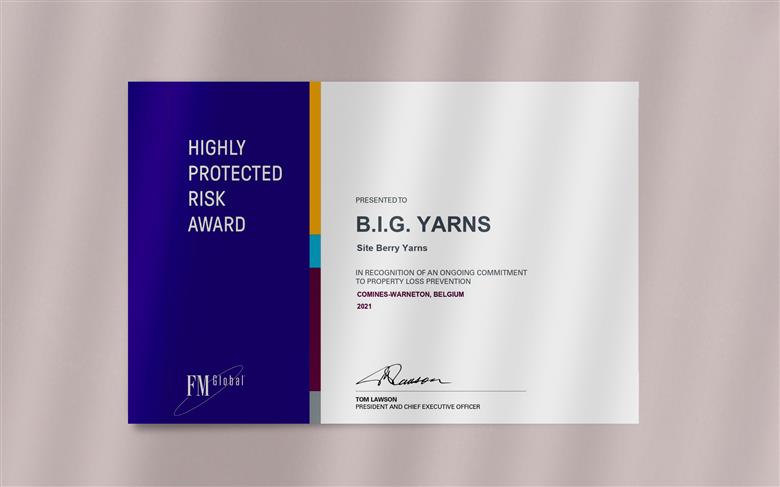 B.I.G. YARNS is proud to announce the attainment of a FM Global ‘Highly Protected Risk’ Achievement Award (HPR Award) for its yarn production facility in Komen, Belgium.
07-09-2021
SABIC introduces unique new pipe technology in collaboration with major players in the pipe industry
 SABIC, a global leader in the chemical industry, today has announced the development of a new technology and range of dedicated polyethylene (PE) and polypropylene (PP) resins that mark a significant leap forward in the performance profile of polyolefin pressure pipes. Together with Tecnomatic and aquatherm, two major specialists in pipe manufacturing, the technology is being advanced from concept to reality. As ‘Golden Sponsor’ of the International Plastic Pipes XX (PPXX) Conference and Exhibition (6-8 September 2021) in Amsterdam, SABIC introduced the new concept during the conference and presented the technology in the PPXX Technical Sessions.
06-09-2021
Solvay Helps La Méridionale’s Ferry Go Beyond Emissions Regulations
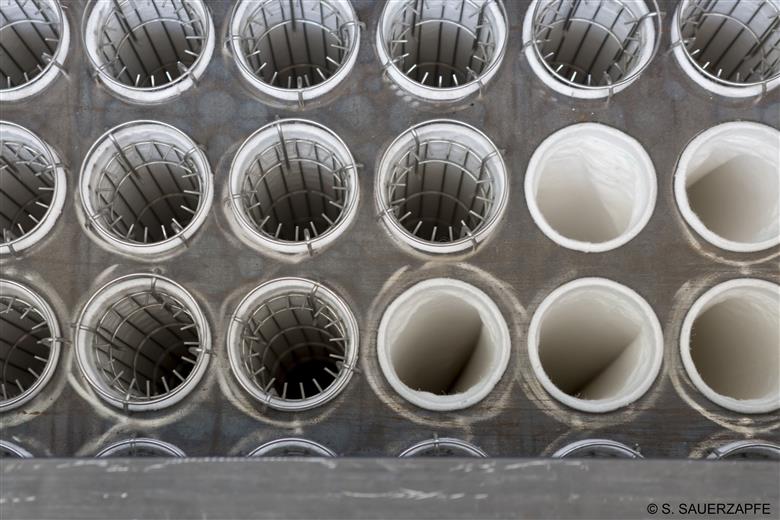 Following a successful test run showing excellent environmental performance, Solvay’s SOLVAir® Marine solution for dry exhaust gas treatment will be adopted on all engines of La Méridionale’s passenger (RoPAX) ferry Piana, following close collaboration with engineering partner ANDRITZ. The partnership will enable La Méridionale to comply with International Maritime Organization (IMO) 2020 regulations for the reduction of SOx (sulfur oxides) emissions and will facilitate removal of 99.9% of particulate matter (PM). This new project represents an important milestone in exhaust gas cleaning within the maritime sector, as it is the first successful use of a dry sorbent-based system on a vessel and enables exhaust gas treatment without the use of any wash water.
06-09-2021
SABIC to present at PCIM Asia 2021 validation of ELCRES™ HTV150 dielectric film in xEV capacitors operating up to 150°C
 SABIC, a global leader in the chemical industry, will exhibit (Booth #E19) and give two informative presentations at PCIM Asia 2021, taking place September 9 to 11 in Shenzhen, China. As part of its talks, SABIC will feature its new ELCRES™ HTV150 dielectric film, which was developed in response to the demand for high-voltage, high-temperature, professional-grade capacitor applications, such as traction inverters for hybrid, plug-in hybrid and battery electric vehicles (xEV). This innovative solution addresses the critical performance gap experienced by incumbent films in the 135°C to 150°C operating temperature range and enables the possibility to fully deploy the power and range promise of silicon carbide (SiC) inverter technology. The company will also highlight its ongoing work throughout the value chain to introduce a film that supports successful capacitor manufacturing and performance.
02-09-2021
Cicor addresses miniaturization of fine-pitch 3D-MIDs with SABIC LNP™ THERMOCOMP™ compounds featuring LDS capability to meet demands of 5G-enabled applications
 Cicor Group, a leading manufacturer of printed circuit boards and hybrid circuits, has selected SABIC’s LNP™ THERMOCOMP™ compounds with laser direct structuring (LDS) capability to produce high-end, three-dimensional molded interconnect devices (3D-MIDs). Building on a longstanding relationship, Cicor and SABIC successfully collaborated to meet multiple, stringent requirements for sophisticated devices used in 5G networking, automotive and consumer electronics applications. SABIC’s portfolio of LNP THERMOCOMP compounds delivers excellent flow for thin walls used in miniaturized designs, optimized LDS performance to achieve uniform fine-pitch circuit patterns and high heat resistance for use in the surface mount technology (SMT) assembly process.
01-09-2021
SABIC lancia i gradi riciclati per il settore automobilistico nell'ambito della gamma di soluzioni circolari TRUCIRCLE™
 SITTARD, PAESI BASSI, 1 settembre 2021 - SABIC, un leader globale nel settore chimico, ha presentato oggi i primi gradi per il mercato automobilistico a base di materiale riciclato meccanico, che fanno parte della gamma di soluzioni e servizi circolari TRUCIRCLE™ dell'azienda. Le nuove resine sono il compound SABIC® T2E-3320EH PP, un polipropilene (PP) caricato talco, ad alto flusso e basse emissioni; la resina XENOY™ T2NX2500UV, una miscela di policarbonato (PC) e polietilene tereftalato (PET) non caricata e stabilizzata agli UV; e la resina XENOY T2NX5230, una miscela PC/PET con carica minerale. Tutti e tre i materiali contengono fino al 29% di materiale riciclato e offrono prestazioni eccellenti, analoghe a quelle delle attuali resine vergini, aprendo ai clienti del settore automobilistico nuove possibilità che possono contribuire al raggiungimento dei loro obiettivi di sostenibilità.