07-09-2021
SABIC introduces unique new pipe technology in collaboration with major players in the pipe industry
 SABIC, a global leader in the chemical industry, today has announced the development of a new technology and range of dedicated polyethylene (PE) and polypropylene (PP) resins that mark a significant leap forward in the performance profile of polyolefin pressure pipes. Together with Tecnomatic and aquatherm, two major specialists in pipe manufacturing, the technology is being advanced from concept to reality. As ‘Golden Sponsor’ of the International Plastic Pipes XX (PPXX) Conference and Exhibition (6-8 September 2021) in Amsterdam, SABIC introduced the new concept during the conference and presented the technology in the PPXX Technical Sessions.
06-09-2021
SABIC to present at PCIM Asia 2021 validation of ELCRES™ HTV150 dielectric film in xEV capacitors operating up to 150°C
 SABIC, a global leader in the chemical industry, will exhibit (Booth #E19) and give two informative presentations at PCIM Asia 2021, taking place September 9 to 11 in Shenzhen, China. As part of its talks, SABIC will feature its new ELCRES™ HTV150 dielectric film, which was developed in response to the demand for high-voltage, high-temperature, professional-grade capacitor applications, such as traction inverters for hybrid, plug-in hybrid and battery electric vehicles (xEV). This innovative solution addresses the critical performance gap experienced by incumbent films in the 135°C to 150°C operating temperature range and enables the possibility to fully deploy the power and range promise of silicon carbide (SiC) inverter technology. The company will also highlight its ongoing work throughout the value chain to introduce a film that supports successful capacitor manufacturing and performance.
02-09-2021
Cicor addresses miniaturization of fine-pitch 3D-MIDs with SABIC LNP™ THERMOCOMP™ compounds featuring LDS capability to meet demands of 5G-enabled applications
 Cicor Group, a leading manufacturer of printed circuit boards and hybrid circuits, has selected SABIC’s LNP™ THERMOCOMP™ compounds with laser direct structuring (LDS) capability to produce high-end, three-dimensional molded interconnect devices (3D-MIDs). Building on a longstanding relationship, Cicor and SABIC successfully collaborated to meet multiple, stringent requirements for sophisticated devices used in 5G networking, automotive and consumer electronics applications. SABIC’s portfolio of LNP THERMOCOMP compounds delivers excellent flow for thin walls used in miniaturized designs, optimized LDS performance to achieve uniform fine-pitch circuit patterns and high heat resistance for use in the surface mount technology (SMT) assembly process.
01-09-2021
SABIC lance des grades recyclés pour l’automobile dans le cadre de son portefeuille de solutions d’économie circulaire TRUCIRCLE™
 SITTARD, PAYS-BAS, le 1 septembre 2021 - Dans le cadre de son portefeuille TRUCIRCLE™, qui rassemble les solutions et les services de la société en matière d’économie circulaire, SABIC, l’une des principales entreprises chimiques mondiales, a présenté ce jour ses premiers grades contenant des matières mécaniquement recyclées et destinées au secteur automobile. Il s’agit du compound SABIC® T2E-3320EH PP, un polypropylène (PP) chargé talc, à haute fluidité et à faibles émissions, de la résine XENOY™ T2NX2500UV, un assemblage non chargé et stabilisé aux UV de polycarbonate (PC) et de poly(téréphtalate d’éthylène) (PET) et de la résine XENOY T2NX5230, un assemblage PC/PET à charge minérale. Ces trois matières, qui renferment jusqu’à 29% de matière recyclée, présentent d’excellentes performances, similaires à celles de la résine vierge d’origine, et offrent ainsi aux industriels de l’automobile de nouvelles options pour les aider à atteindre leurs objectifs de développement durable.
31-08-2021
Highlighting innovation in color, SABIC debuts latest LNP™ VISUALFX™ portfolio
 SABIC, a global leader in the chemical industry, has launched its latest LNP™ VISUALFX™ resin portfolio featuring unique colors and special effects from the company’s new Expression 2021/2022 color palette, developed through research on emerging aesthetic trends. Designers and engineers in the Color, Material and Finish (CMF) field can find inspiration within this portfolio from the consumer preferences revealed through this research, for new 5G-enabled mobile devices and Internet of Things (IoT) applications. In addition to the new LNP VISUALFX materials, SABIC’s complete color offering includes global COLORXPRESS™ custom color and color matching services.
19-08-2021
SABIC launches NORYL™ polyol for cast polyurethanes, simultaneously increasing hardness and elasticity to help extend the life of industrial applications
 SABIC, a global leader in the chemical industry, today introduced NORYL™ AP2001G polyol for cast polyurethane (PU) applications. By partially replacing polypropylene glycol (PPG) or polytetramethylene ether glycol (PTMG), this oligomer of polyphenylene ether (PPE) improves the performance of cast PU systems by increasing both hardness and elasticity – properties that have been difficult to improve simultaneously until now. In addition, NORYL AP2001G polyol provides resistance to oils, moisture, abrasion, tearing and heat, helping cast PU parts withstand extreme conditions and potentially lengthen their useful life. Potential applications include mining drill bits, screens and protective pipe liners for slurry transport; components for hydraulic, robotic and conveying equipment; and wheels, casters and rollers.
05-08-2021
SABIC first in industry to launch circular polycarbonate produced from post- consumer mixed plastic, based on advanced recycling
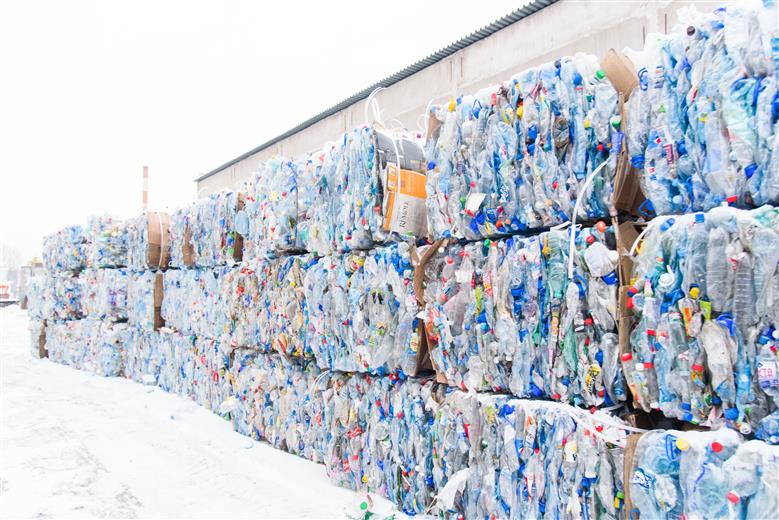 SABIC, a global leader in the chemical industry, today announced the launch of its certified circular polycarbonate (PC) resin and blends made from the upcycling of post-consumer mixed plastic - a first in the industry. This solution, based on advanced recycling, demonstrates SABIC’s ongoing commitment to drive towards a circular economy for plastics, by increasing the availability of more sustainable products.
04-08-2021
SABIC’s new LNP™ THERMOCOMP™ compounds deliver exceptional warpage control, laser welding capability allowing design freedom for improved signal transmission for ADAS radar covers
 As urbanization propels the development of self-driving technology and broader implementation of advanced driver assistance systems (ADAS), automotive OEMs and tiers are actively seeking high-performance materials that can optimize the capabilities of today’s higher-frequency (>75 GHz), millimeter-wave (mmWave) radar units. To help meet this need, SABIC is launching two new materials, LNP™ THERMOCOMP™ WFC06I and WFC06IXP compounds, developed for the front and back enclosure covers (respectively) of next-generation radar units. The new glass fiber-reinforced polybutylene terephthalate (PBT) grades offer a very low dissipation factor (Df) and dielectric constant (Dk) to help support the transmission of higher-frequency radar signals. They also feature super-low warpage that allows designers to potentially create new, thinner covers that improve signal transmission. Furthermore, these new SABIC products can contribute to efficient radar unit assembly by supporting high-speed, high-precision laser welding. In fact, LNP THERMOCOMP WFC06I compound provides excellent laser transmission performance among PBT materials currently available.
26-07-2021
SABIC lance des film et plaques de polycarbonate LEXAN™ à base de matières premières renouvelables et certifiées ISCC
 SABIC, l’une des principales entreprises chimiques mondiales, a annoncé que son usine Functional Forms de Bergen-op-Zoom (Pays-Bas) avait été certifiée au titre du programme de l’International Sustainability & Carbon Certification (ISCC) PLUS, pour sa nouvelle gamme de film et plaques LEXAN™ fabriquées à partir de matières premières renouvelables. En liaison avec l’initiative TRUCIRCLE™ de la société, la nouvelle offre de produits en film et plaques LEXAN vient répondre à la croissance mondiale de la demande pour davantage de solutions matières durables dans le cadre de l’économie circulaire qui connaît une progression constante parmi l’industrie des matières plastiques.
29-06-2021
SABIC’s new LNP™ ELCRES™ EXL resin delivers superior flame retardance for ultra-thin parts to help Realme address the new IEC 62368-1 regulatory safety standard for consumer electronic devices
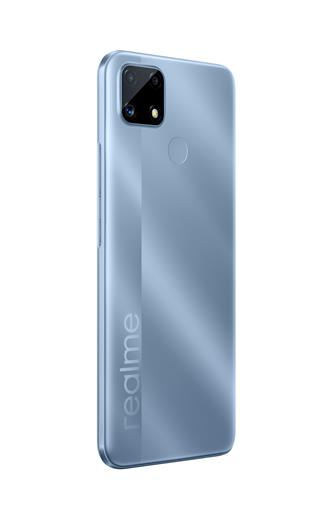 The implementation of the International Electrotechnical Commission’s new IEC 62368-1 safety standard for consumer electronics is prompting many manufacturers to seek higher-performing flame-retardant (FR) materials. Realme, a leading Chinese smartphone manufacturer, has selected SABIC’s new LNP™ ELCRES™ EXL7414 copolymer resin for the battery enclosure of its C25 phone to achieve UL 94 V0 FR compliance at 0.6mm, addressing the new IEC standard. Additionally, the superior flame retardance of the new LNP copolymer resin supports its potential use in ultra-thin-wall components to help save device weight and space in ever-thinner designs. SABIC’s LNP ELCRES EXL7414 copolymer resin also delivers excellent flow for thin-wall molding; ductility to resist damage from drops; and good chemical resistance to withstand ultraviolet (UV)-cured painting. The new Realme smartphone launched in March 2021.
16-06-2021
Fraunhofer, SABIC, and Procter & Gamble join forces in closed-loop recycling pilot project for single-use facemasks
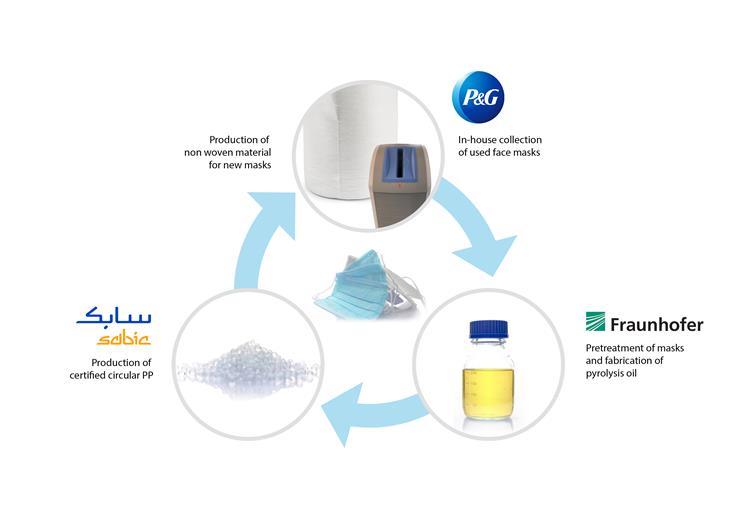 Fraunhofer Institute UMSICHT, SABIC and Procter & Gamble (P&G) today announced their collaboration in an innovative circular economy pilot project which aimed to demonstrate the feasibility of closed-loop recycling of single-use facemasks.
08-06-2021
SABIC and Local Motors conduct feasibility study of recycling scrap thermoplastic parts and shavings from 3D printing process
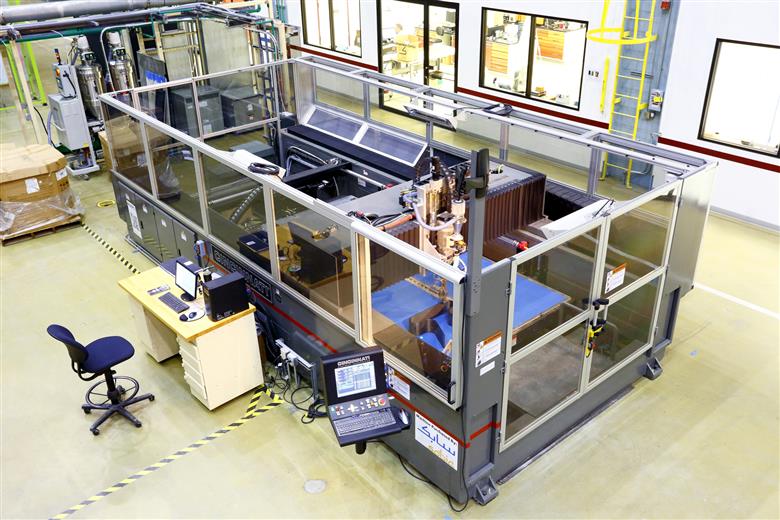 With the desire to improve the circularity of large format additive manufacturing (LFAM), SABIC, a global leader in the chemical industry, and Local Motors, a next-generation vehicle manufacturer, completed a joint study on the feasibility of recycling scrap thermoplastic parts and shavings from the 3D printing process. The study explored more sustainable alternatives to landfilling large, printed parts in anticipation of wider adoption of LFAM. It included analyzing the printability and mechanical properties of SABIC’s LNP™ THERMOCOMP™ AM reinforced compound, used by Local Motors, after being printed, reclaimed, ground and reprocessed into pellet form. The study determined that material from post-production parts and scrap can potentially be reused in LFAM or other processes, such as injection molding or extrusion, at amounts up to 100 percent. These insights can help identify a feasible path to circularity and an extended lifecycle for materials used by the LFAM industry.