25 Mar 2024
SABIC signs Memorandum of Understanding with Pashupati Group to target recycling opportunities in India
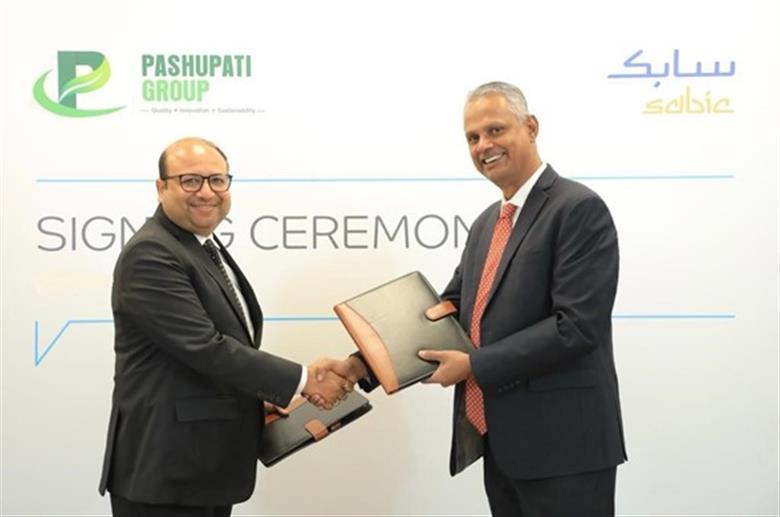 SABIC, a global leader in the chemical industry, has signed a Memorandum of Understanding (MoU) with Pashupati Group, a leading Indian recycler of plastic waste and supplier of high-quality recycled products, including polyolefin pellets and recycled packaging bags, with operations in North, West & Southern parts of India. The MoU is targeted at developing local recycling opportunities in India, and expanding SABIC’s global network of qualified recycling partners.
19 Mar 2024
SABIC to demo at OFC 2024 EXTEM™ resins well suited for micro-lens arrays in co-packaged optics
 SABIC, a global leader in the chemical industry, will demonstrate at the 2024 Optical Fiber Communication (OFC) Conference and Exhibition the advantages of its Edison Award-winning EXTEM™ RH series resins for production and assembly of micro-lens arrays (MLAs) in commercial onboard and co-packaged optics. Two demonstrators built by Tyndall National Institute and the Chip Integration Technology Center (CITC) will be featured at the SABIC booth (#1204) during the event.
18 Mar 2024
SABIC & Jessa Hospital achieve successful step towards creating circular polymers based on advanced recycling of used medical plastic
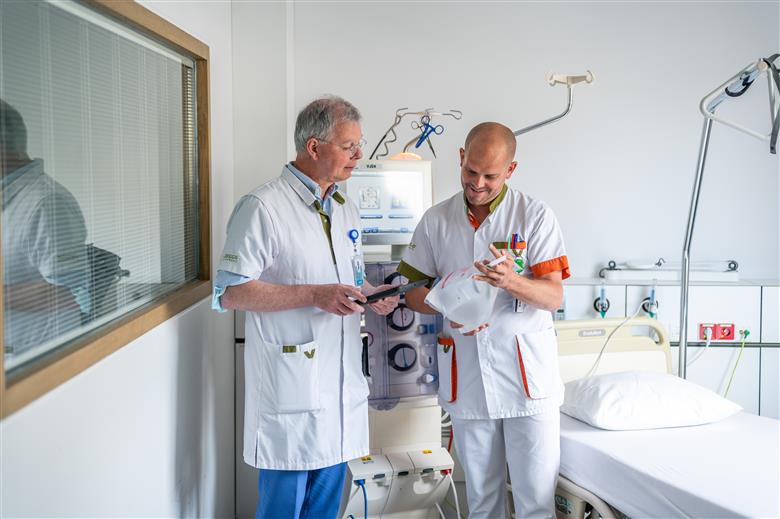 SABIC, a global leader in the chemical industry, has successfully demonstrated the feasibility of recycling used medical plastic back into the medical materials stream. The project was initiated together with the dialysis department at Jessa Hospital, one of the largest non-university medical cluster in the Limburg region of Flanders, Belgium. Serving as a pilot proof-of-concept, used medical plastic generated at Jessa’s hospitals was converted to pyrolysis oil in an advanced recycling process, delivering circular feedstock for SABIC’s production of TRUCIRCLE™ polymers in medical grade quality with same performance, purity and physiological safety as virgin-based medical grade polymers. This is indispensable for medical approvals by regulators.
12 Mar 2024
SABIC’s new LNP™ ELCRES™ SLX resin elevates aesthetics, durability of paint-free exteriors
 SABIC, a global leader in the chemical industry, today introduced LNP™ ELCRES™ SLX1271SR resin, a new addition to its weatherable LNP SLX copolymer portfolio. This specialty material features enhanced scratch and mar resistance and a high-gloss surface finish to provide the automotive industry with a new molded-in color solution for exterior components. LNP ELCRES SLX1271SR resin also delivers exceptional weatherability, continuous UV stability and good mechanical performance. By adopting this new solution, customers can leverage the environmental and potential system cost advantages of paint elimination while maintaining the attractive appearance of exterior parts over time.
7 Mar 2024
Queen Máxima of the Netherlands visits SABIC & Plastic Energy world-first commercial advanced recycling unit
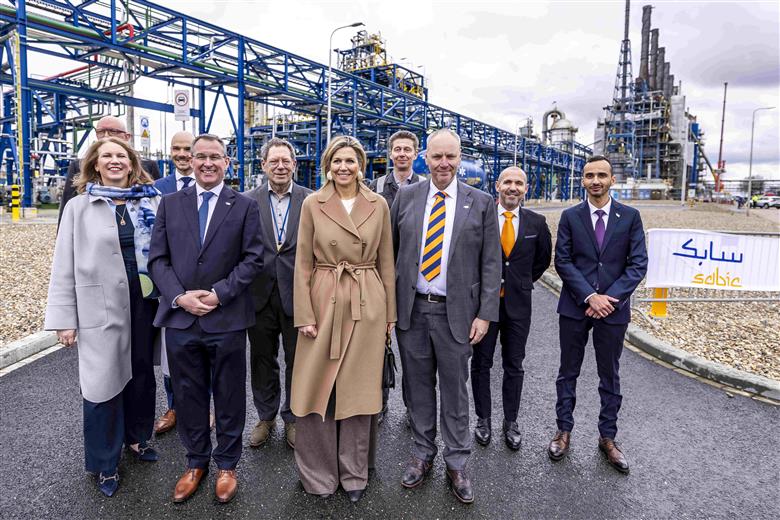 SABIC, a global leader in the chemical industry, welcomed Her Majesty, Queen Máxima of the Netherlands, to the SABIC and Plastic Energy advanced recycling unit and the SABIC-owned hydrotreater unit. The visit formed part of a broader working visit of the Queen to the Chemelot industrial site in Geleen, the Netherlands, to understand the efforts taking place on site in the field of circularity and sustainability.
20 Feb 2024
SABIC’s ULTEM™ resin enables complex optical carrier design for Blickfeld's first smart LiDAR
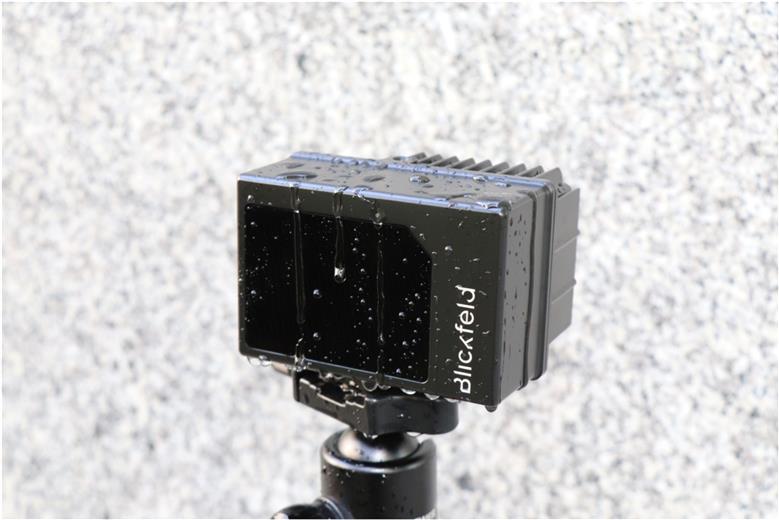 SABIC, a global leader in the chemical industry, has announced that its ULTEM™ resin has helped Blickfeld, a leading innovator in LiDAR technology, develop their recently launched Qb2 device. Blickfeld’s new Qb2 is the first smart LiDAR sensor that can both capture and process 3D data on a single device. LiDAR (light detection and ranging) is an optical sensing technique that uses lasers to produce highly accurate 3-dimensional measurements of any environment or object. The highly complex and miniaturized optical carrier required for this new device is molded in ULTEM resin. The choice of ULTEM resin helped to reduce total system cost with a lower material cost combined with easier and faster production scale up compared to aluminum.
6 Feb 2024
SABIC’s new LNP™ LUBRILOY™ compounds extend portfolio of non-PTFE lubricated materials
 SABIC, a global leader in the chemical industry, today announced here at MD&M West 2024 (Booth #3287) a significant expansion of its LNP™ LUBRILOY™ portfolio of internally lubricated specialty compounds. The new LNP LUBRILOY products can meet customer demands for high-performance alternatives to materials lubricated with polytetrafluoroethylene (PTFE), which is a per- and polyfluoroalkyl substance (PFAS). These new grades extend SABIC’s LUBRILOY technology to additional base resins and feature a novel, patented lubrication technology enabling OEMs to help avoid health and regulatory issues associated with materials containing intentionally added PFAS.
30 Jan 2024
SABIC ULTEM™ HU resins, a highlight at MD&M West 2024, can help ease transition from EtO sterilization
 SABIC, a global leader in the chemical industry, will highlight at MD&M West 2024 in Booth #3287 its versatile and durable ULTEM™ HU resins, which can help medical device manufacturers choose alternatives to ethylene oxide (EtO) sterilization. Demand is growing for materials compatible with other sterilization methods in anticipation of a new ruling by the U.S. Environmental Protection Agency (EPA) that may reduce EtO emissions from commercial sterilization facilities. ULTEM HU resins are stable across many popular sterilization processes, providing the potential for multiple use options. These resins can also withstand multiple sterilization cycles. Their excellent retention of strength and color can help reduce breakage and discoloration, thereby potentially extending the useful life of applications made with these materials.
18 Jan 2024
SABIC ICEhouse™ returns to Davos for the 8th time as an iconic hub showcasing sustainable innovation & collaboration
 SABIC, a global leader in the chemical industry, is showcasing its iconic ICEhouse™ now for the 8th year during the World Economic Forum annual meeting taking place in Davos, Switzerland from 15-19 January, 2024.
13 Dec 2023
SABIC, SD & Linde enter strategic collaboration to explore opportunities for decarbonization in chemical industry
 SABIC, a global leader in the chemicals industry, Scientific Design (SD), an affiliate company licensing leader in Ethylene Glycol Technology and Linde Engineering, a subsidiary of Linde, a leading global industrial gases and engineering company, have entered into a Memorandum of Understanding to explore collaboration opportunities to decarbonize the SD Ethylene Glycol Process. This collaboration seeks to develop innovative solutions to reduce carbon footprint and achieve low-carbon emissions technology by offering SABIC's innovative CO2 recovery and purification technology to SD licensed manufacturing glycol plants worldwide. The ultimate goal is to establish sustainable Ethylene Oxide and Ethylene Glycol production and set industry benchmarks for carbon-neutral industries.
28 Nov 2023
SABIC & CJ Cheiljedang collaborate on world-first ready-to-eat rice packaging bowls made with 25% certified renewable PP
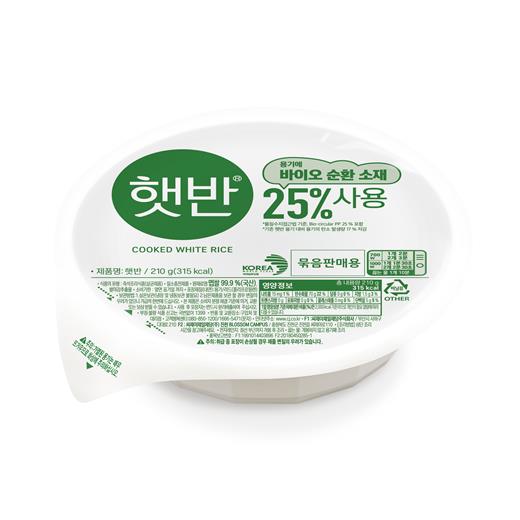 SABIC, a global leader in the chemicals industry, has announced that a food-contact grade of its TRUCIRCLE™ portfolio of certified renewable polypropylene (PP) resins is used in the production of Hetbahn ‘햇반’ instant white rice packaging bowls by CJ CheilJedang, a South Korea-based global food company. The rigid bowls are the first of their kind using certified renewable PP in a ready-to-eat-rice packaging in Asia Pacific and align with CJ’s strong ‘Nature to Nature’ sustainability roadmap.
25 Oct 2023
SABIC reduces carbon footprint in collaboration with Charge Amps through certified renewable LEXAN™ polycarbonate for electric vehicle charger housings
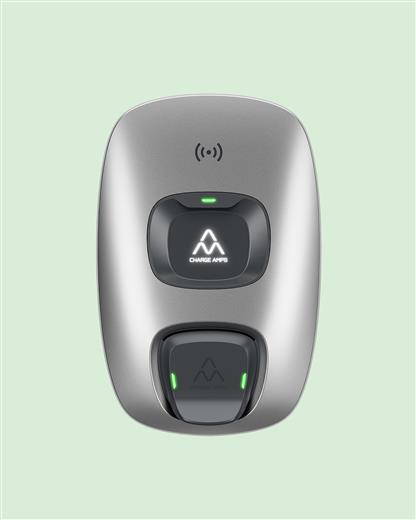 SABIC, a global leader in the chemicals industry, is enabling Charge Amps to manufacture electric vehicle (EV) chargers with a housing made from certified renewable polycarbonate (PC), a first for the industry.